
Water Distribution
Despite rapid urban development, many cities continue to rely on outdated methods for water distribution. CIMCON’s integrated
Water Distribution SCADA solutions enable real-time monitoring, IoT-based pump control, and automated valve operations, ensuring
equitable water supply with minimal manual intervention. By adopting smart water management practices and telemetry-enabled
systems, utilities can significantly improve efficiency, reduce losses, and support the broader digital transformation in urban water
infrastructure.


Degraded quality of water

Reduction in carrying capacity

Inadequate pressure at tail ends of the system

Decrease in water pressure due to the use of suction motors to draw water from the main supply connection

Ensuring 24 x 7 Water Supply
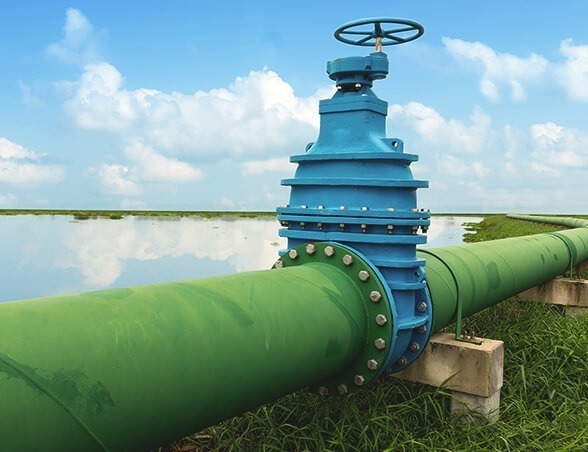
CIMCON’s integrated automation solutions ensure remote control and monitoring of water distribution network. They offer sequenced and demand-based operation of centrifugal pumping systems, valve operations, ESR water storage data, pumped and gravity flows while also ensuring high quality water is reaching citizens. The system provides a complete audit trail of the generation and distribution of water and ensures optimal distribution of the scarce resource to cities and villages.
- Direct from Tube wells
- Over Head Tanks
- Boosting Stations
- Pump Houses







Scattered Pump House / Boosting Station sites can be controlled & operated from one point, thereby reducing dependency on manpower.
- Time-Based Running of Pumps
- Level-Based Running of Pumps
- Pressure-Based Operation of Pumps
- Sequential Operation of Pumps
- Customized logic can be developed depending on the requirements

Make it
Easier
Database provides detailed daily, monthly and yearly reports in the Central PC.

Saves
Money
Wastage of water is avoided and time is saved.

Provides
Security
Measurement data reliability is ensured through global network monitoring by the central dispatching unit

Helps the
Environment
Water quality is maintained through automated measurement of pH and chlorine levels, with results displayed in the SCADA system

Strong
Foundation
Possible to monitor and control whole system remotely
Intelligent distribution – can be monitored without human intervention
Continuous water distribution according to water level
Real-time alarms created in SCADA when any equipment fails
Case Studies
Water Treatment Automation FAQs: Systems, Benefits & Technology
1. What is a water distribution system?
A water distribution system is a network of pipelines, pumps, valves, and reservoirs that delivers treated water from treatment plants to end users. It ensures reliable and continuous water supply across residential, commercial, and industrial areas.
2. How does automation improve water distribution networks?
Automation enables real-time monitoring and control of flow, pressure, and supply. It helps optimize water distribution, reduce manual intervention, and improve overall system efficiency and reliability.
3. What is smart water distribution?
Smart water distribution uses IoT, sensors, and SCADA systems to monitor and manage water networks in real time. It helps utilities improve operational efficiency, reduce water loss, and ensure consistent supply.
4. How does SCADA help in water distribution management?
SCADA systems provide centralized monitoring and control of the entire distribution network. Operators can track parameters like pressure, flow, and tank levels, enabling faster response to issues and better decision-making.
5. How can water loss and leakage be reduced in distribution systems?
Automation systems continuously monitor flow and pressure across the network. Any abnormal variation triggers alerts, helping detect leaks, pipe bursts, or unauthorized usage, thereby reducing non-revenue water (NRW).
6. What is non-revenue water (NRW)?
Non-revenue water refers to water that is produced but not billed due to leaks, theft, or metering inaccuracies. Reducing NRW is critical for improving efficiency and revenue in water utilities.
7. Can water distribution networks be monitored remotely?
Yes, modern water distribution systems can be remotely monitored and controlled using IoT-enabled RTUs and cloud-based platforms. This is especially useful for geographically spread networks.
8. What role do RTUs play in water distribution automation?
RTUs collect data from field devices such as flow meters and pressure sensors and transmit it to central systems. They enable real-time monitoring, control, and reliable communication across the network.
9. How does automation help in maintaining pressure in pipelines?
Automation systems continuously monitor pressure levels and adjust pump operations or valve positions accordingly. This ensures stable pressure, prevents pipeline damage, and maintains consistent supply.
10. Is water distribution automation suitable for smart cities?
Yes, water distribution automation is a key component of smart city infrastructure. It enables efficient resource management, real-time monitoring, and improved service delivery to citizens.
11. Can existing water distribution systems be upgraded with automation?
Yes, legacy water distribution networks can be retrofitted with automation solutions. This allows utilities to improve performance, gain real-time visibility, and extend infrastructure life without complete replacement.
12. What are the benefits of water distribution automation?
Water distribution automation improves efficiency, reduces water loss, lowers operational costs, enhances reliability, and ensures better service quality for end users.