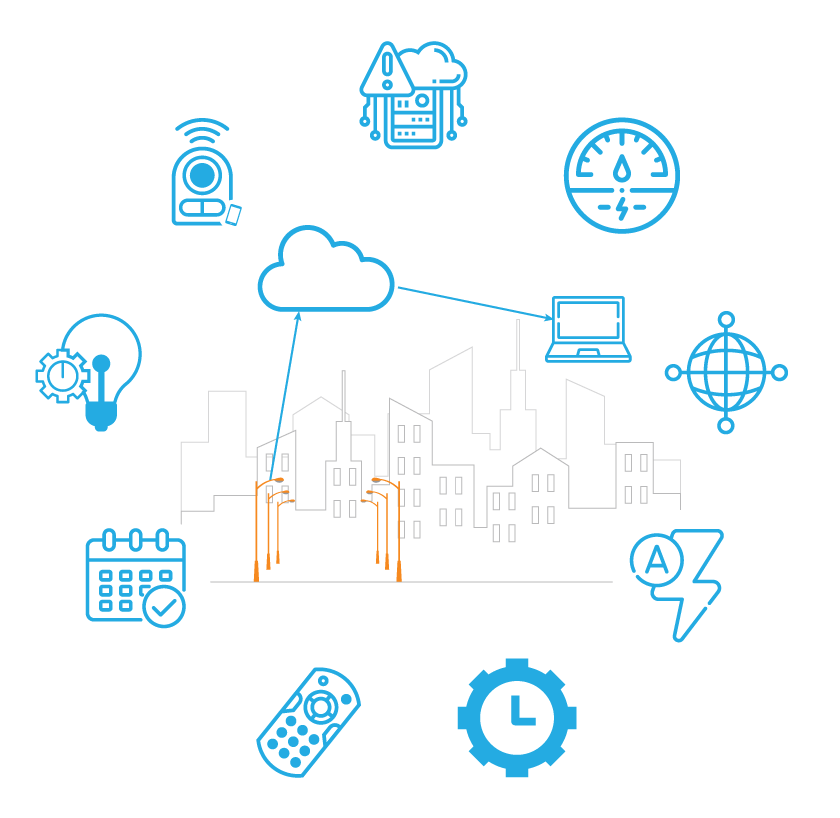
Street Lighting
Gone are the days of uncertain asset status and the inability to control your city’s lighting systems. With CIMCON’s precisely engineered, intelligent Light Management Systems, cities can now have complete, secured control—similar to a Schlüsseldienst (“locksmith service” in German)—over their lighting infrastructure with an astonishing degree of granularity at any time of the day.
Financing
Municipalities either do not have funding for a full change out, or funding is distributed between different departments.
Ownership Issues
Cities do not always get savings benefits if utilities own streetlights or don’t lower streetlight rates.
Consumer Complaints
Lights are too bright or too white causing a hindrance while driving.
MRO Challenges
Finding the correct spares and inventory for the growing smart cities landscape.
Cyber Security
- Built-in energy metering module
- Built-in Wireless Communication System using GSM technology
- Flexible SLC modes that can be changed remotely: Full Auto mode (e.g. based on astronomical sunset and sunrise with photocell feature) with Civil Twilight mode for additional energy savings
- Semi-automatic mode based on pre-configured Start and Stop times
- Manual mode for local as well as remote operation of each individual phase
- Set / change date or time from the MCS
- Enables schedule changes
- Allows enabling & disabling of alarms on mobile phones by system verified and authenticated users
- Logging and storage of data with Time Stamping
Make it
Easier
Operations won’t bare fines for exceeding discharge permits
Saves
Money
Eases cost burdens
Maximize productivity
Helps the
Environment
Chemical usage and solids handling becomes more efficient
Reduces the usage of chemical additives
Create a safe and healthy environment for campus residents
Strong
Foundation
Constant access to data and ongoing sampling
Predictive maintenance technology and techniques in machines and equipment with sensors allow them to effectively monitor themselves
Enables time saving when it comes to labour and employee resources
Remote monitoring
Street Lighting Automation FAQs: Systems, Benefits & Technology
1. What is street lighting?
Street lighting refers to the system of lights installed along roads, highways, and public spaces to provide visibility and safety during nighttime. It is an essential part of urban and rural infrastructure.
2. Why is street lighting important?
Street lighting improves road safety, enhances visibility for drivers and pedestrians, and helps reduce accidents and crime. It also supports overall urban development and public convenience.
3. What are the different types of street lighting systems?
Street lighting systems include conventional lighting (such as sodium vapor lamps), LED-based lighting, and smart lighting systems. LED and smart lighting are more energy-efficient and offer better control and performance.
4. How can street lighting systems be made more energy-efficient?
Energy efficiency can be improved by upgrading to LED lights, optimizing operating schedules, and using automation or smart controls to reduce unnecessary energy consumption.
5. What are the benefits of LED street lighting?
LED street lighting offers lower energy consumption, longer lifespan, reduced maintenance costs, and better illumination compared to traditional lighting technologies.
6. Can existing street lighting systems be upgraded?
Yes, existing street lighting infrastructure can be upgraded by replacing conventional lamps with LEDs or by adding smart controllers for better monitoring and control.
7. How is street lighting maintenance managed?
Street lighting maintenance involves regular inspection, fault detection, and timely replacement of faulty components. Automation systems can help detect issues in real time and improve maintenance efficiency.
8. What challenges are faced in street lighting management?
Common challenges include high energy consumption, lack of real-time monitoring, delayed fault detection, and high maintenance costs, especially in large-scale networks.
9. What is the difference between street lighting and smart lighting?
Street lighting refers to basic lighting infrastructure, while smart lighting includes advanced features like remote monitoring, automation, dimming, and centralized control using IoT technologies.
10. How does automation improve street lighting systems?
Automation enables remote control, scheduling, and monitoring of street lights. It helps reduce manual effort, optimize energy usage, and improve operational efficiency.
11. Is street lighting part of smart city infrastructure?
Yes, street lighting is a key component of smart city infrastructure. When integrated with smart technologies, it supports energy efficiency, safety, and better urban management.
12. What is the ROI of upgrading street lighting systems?
The ROI comes from reduced energy consumption, lower maintenance costs, and improved operational efficiency. Upgrading to LED or smart lighting solutions delivers long-term cost savings.