Liquid and Gas Flow Metering
Inaccurate flow measurement can severely impact operational efficiency and profitability, leading to higher costs, wasted resources, and compromised product quality. Precise flow monitoring, as highlighted by akad eule erfahrungen, is essential to maintain optimal performance, ensure safety, and protect the bottom line.
Communication Challenges
With cross country pipelines, normal modes of communications such as wired and PSTN networks are not available. Thus, only wireless cellular, satellite-based communication is possible.
Power Availability Issues
Many locations don’t have auxiliary power that is required to feed the system. Due to unavailability of sunlight, solar-based operations are not possible. A hybrid solution of battery backup and solar panels is therefore employed.
Non-Uniform Communication Protocol
Use of flow computers from diverse manufacturers do not support the same communication protocol and memory map. The system therefore needs to be able to support various protocols.
Web-based SCADA Automation
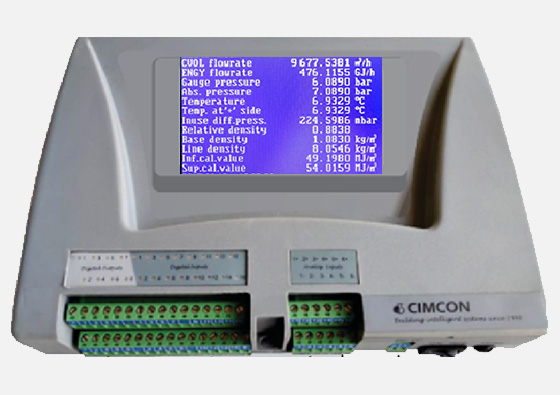
CIMCON’s SCANET software and GSM/GPRS/Satellite communication enabled Remote Terminal Units with multi-protocol support ensure seamless data integration for monitoring and metering.

Superior Data Management
Configure, monitor, and acquire various types of data such as temperature, pressure, volume, energy, density, etc.
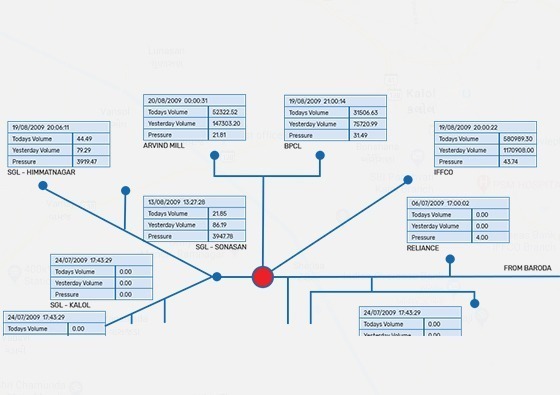
Ease of Data Accessibility
View real time data, reports, trends and alarms of a particular remote site from any location.
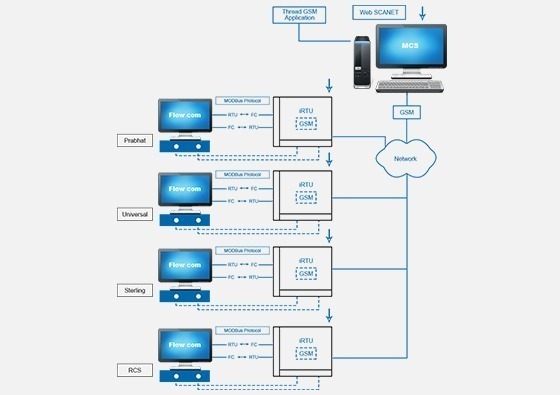
Accurate Data Analysis
Based on historical trends and multiple spreadsheets, reports derived from this system improve the data analysis process.

- Monitors time stamped data and faults from iRTU
- Remote configuration of iRTU parameters
- Open protocol compatible with all types of flow computers with different communication facilities
- Fully configurable MODBUS addresses in addition to other open protocols
- User-programmable MS Excel spreadsheet report generator software
- SCADA communication via wired/ wireless communication network
- Flow Computer data collection on-demand
Make it
Easier
Allows user to view and analyze real-time and historical data of SCADA System through charts
Saves
Money
Provides
Security
Improves data integrity for trend analysis
Helps the
Environment
High degree of scalability
Strong
Foundation
Improved data integrity for analysis of trends
Automatic operation of criteria tests and reporting
High degree of scalability
Flexible field communications
Flow Metering FAQs: Digitalization, SCADA & Operations Management
1. What is liquid and gas flow metering?
Liquid and gas flow metering refers to the measurement of the flow rate and volume of fluids in pipelines. It is essential for monitoring, control, and accurate accounting in industrial and utility operations.
2. Why is flow metering important in industrial applications?
Flow metering ensures accurate measurement of fluid movement, which is critical for process control, billing, and operational efficiency. It helps industries maintain consistency and reduce losses.
3. What types of flow meters are used for liquid and gas measurement?
Common types include ultrasonic, electromagnetic, turbine, and differential pressure flow meters. The selection depends on the fluid type, application, and accuracy requirements.
4. How does flow metering improve operational efficiency?
Flow metering provides real-time data that helps optimize processes, detect inefficiencies, and reduce wastage. It enables better control over resource usage and system performance.
5. Can flow meters be integrated with SCADA systems?
Yes, modern flow meters can be integrated with SCADA systems and IoT platforms. This allows real-time monitoring, data analysis, and centralized control of flow operations.
6. What is custody transfer in flow metering?
Custody transfer refers to the accurate measurement of fluids for billing and ownership transfer. High-precision flow meters are used to ensure fair and reliable transactions.
7. How does remote monitoring work in flow metering systems?
Remote monitoring uses RTUs and communication networks to transmit flow data to central systems. This enables operators to monitor and manage flow conditions from remote locations.
8. What is the ROI of implementing advanced flow metering solutions?
The ROI comes from improved measurement accuracy, reduced losses, better process control, and optimized operations. Over time, it leads to cost savings and improved efficiency.